
Every classroom has students who struggle with learning, and as educators, understanding these challenges is key to supporting their success. The Auspeld, Understanding Learning Difficulties is a comprehensive guide designed specifically for teachers, equipping you with the knowledge and strategies to help students with learning difficulties and disabilities, including dyslexia, dyscalculia, and written expression disorders.
Not all learning challenges are the same. This guide explains the differences between learning difficulties, often caused by external factors like ineffective instruction or sensory impairment, and learning disabilities, which are neurodevelopmental in origin and persist despite appropriate intervention. Understanding these distinctions helps educators identify students who need targeted support.
This resource provides proven teaching techniques that work for all students, especially those with learning difficulties. Strategies such as explicit instruction, retrieval practice, and structured phonics programs can make a significant impact in literacy and numeracy development.
With clear explanations of essential topics like phonological processing, working memory, and orthographic processing, this guide helps teachers understand the cognitive processes behind learning challenges. It also outlines how accommodations, such as assistive technology, flexible assessment methods, and classroom modifications can create a more inclusive learning environment.
If you work with students who struggle with reading, writing or maths, this guide is an invaluable tool. It will help you identify their needs, implement effective teaching strategies, and ensure they receive the right support to reach their full potential.
By applying the insights from Understanding Learning Difficulties, you can make a real difference in the lives of students who need it most.
For more information and teaching resources contact our team or check out our library.
Click here to Download the Guide
Many people struggle with learning in specific areas, even though they are intelligent and have had the opportunity to learn. These struggles may be due to Specific Learning Disorders (SLDs), which affect reading, writing, or maths skills. SLDs are neurological (related to how the brain processes information) and are not caused by laziness or lack of effort.
For Reading Difficulties (Dyslexia):
For Writing Difficulties:
For Maths Difficulties (Dyscalculia):
For Parents & Teachers:
For more information and resources contact our team or check out our library.

Speld Qld conducts psychoeducational assessments by registered Psychologists. We assess for learning strengths and weaknesses and can provide a diagnosis of Specific Learning Disorder (in reading, written expression, or mathematics), if appropriate. This includes patterns of difficulties you may see commonly referred to as dyslexia, dyscalculia, or dysgraphia (written expression skills not motor skills).
As part of our assessments, we ask for information about someone’s development, type of learning instruction, opportunity for and engagement in learning, other factors that may impact learning, and information about targeted extra intervention or help. All this information helps us to provide useful recommendations on how to support your child.
To diagnose Specific Learning Disorder, Speld Qld uses the DSM-5-TR criteria, which requires that the difficulties learning and using the academic skill/s have “persisted for at least 6 months, despite the provision of interventions that target those difficulties”. This is because we will need to determine that if substantial difficulties are present, they are persistent and not better accounted for by other factors. If you are looking to investigate whether your child may have a Specific Learning Disorder, we recommend ensuring that you have engaged in extra targeted intervention or help in the skill area/s of concern.
By intervention or extra help, we mean extra teaching that is more than the typical or standard teaching of a skill in a classroom. This extra teaching needs to be targeted to the skill that is a weakness or concern (e.g., spelling help for spelling difficulties).
A commonly used timeframe for this extra help or intervention is 6-12 months.
There is no one set intervention or program. Extra intervention and help for skill areas that do not have explicit programs may involve explicit and repeated teaching of the target skills using quality resources and approaches.
Some resources may be available in the Speld Qld library.
Library resources can be borrowed and posted to members.Examples of phonics resources, which can support reading and spelling skills:
Examples of Reading and Spelling resources (with phonics):
Examples of Spelling resources:
Examples of Reading resources
Examples of Reading Comprehension resources:
Examples of Written Expression resources:
Examples of Mathematics resources:

Supporting and navigating your child’s journey with learning difficulties can be an intimidating process, especially in the early stages of investigating the situation.
Queensland schools support students with learning disorders by providing access to a range of supports tailored to meet individual needs.
Seeking the support of your child’s school teachers is an important step to understanding how they are progressing, what support they are receiving and working together towards a plan for your child’s development.
Once you arrange a parent-teacher interview, it is important to be prepared and know how to approach the conversations to ensure you get the most out of your meeting.
Code Read Dyslexia Network shared “7 Tips for meeting with your child’s school” written by Sarah Mitchell, Dyslexia and Literacy Consultant, that can help you enter the parent-teacher meeting confidently, with topics including:
Prepare
Keep all reports, emails, and notes in one folder for easy reference. Research effective teaching strategies and prepare key questions. Focus on solutions, practice responses, and stay constructive to ensure the best support for your child.
What to Ask?
Ask if your child has an Individual Education Plan (IEP) and request assessment reports. Inquire about interventions, their effectiveness, and whether they are evidence-based. Clarify what accommodations are provided and ensure the IEP includes targeted support, not just adjustments.
Put everything in writing
Take notes during the meeting and email them to attendees for confirmation. Record key points, action items, and deadlines. Request a follow-up review date and details on how progress will be measured.
Use time wisely
Prioritise key concerns, focus on solutions, and ask necessary questions. Stay future-focused and arrange follow-ups if needed.
Follow up
Check in after two weeks and maintain monthly communication. Collaborate with teachers rather than relying on your child for updates.
Leave silent space
Ask direct questions and allow time for responses. Silence can encourage deeper discussion and problem-solving.
Educate respectfully
Share concise resources with teachers and inquire about learning difficulty training. Support their knowledge without being confrontational.
For more information and resources contact our team or check out our library. Take the first steps towards your child’s future!
Click Here to Download the Guide

Anxiety is associated with feelings of worry, nervousness, or apprehension. Everyone feels anxious sometimes. It is normal to feel nervous or anxious about a variety of situations, like just before an exam or when doing something new. For example, children, especially those with learning difficulties, can feel anxious about attending and returning to school after a break.
There are lots of things you can do to help your child manage their anxiety and support their wellbeing. We have put together 5 tips and a list of resources to help you and your child.
When anxious feelings don’t go away, are very intense, and happen a lot of the time, interfering with everyday life, it is important to seek further support. A good first step is to talk to your general practitioner (GP) to discuss what types of treatment and support is available. Psychologists and other mental health services provide therapies for anxiety. Psychologists can be found through the AAPI Find a Psychologist or APS Find a Psychologist | APS services.
There are many great resources available. Below is a list of some organisations that offer support, information, and strategies to support children experiencing anxiety.
Kids Helpline
Ages 5–25 years
Call 1800 55 1800 (24/7)
WebChat (24/7) – waiting times apply
Email counselling – inbox is checked 8am–10pm AEST, 7 days
Beyond Blue
Ages 16+ years
Call 1300 22 4636 (24/7)
WebChat support service (24/7)
Email support service (reply within 24 hours)
Lifeline
All ages
Call 13 11 14 (24/7)
The Brave Program
Ages 3-17 years
A free interactive, online program for the prevention and treatment of childhood and adolescent anxiety, with information tailored for parents and children of different age groups.
Emerging Minds
Anxiety in primary school-aged children - Emerging Minds
Supporting a child with anxiety - tips for parents
8 tips to help your child manage back-to-school anxiety - Emerging Minds
Professional anxiety support for children - tips for parents
Raising Children Network
Anxiety and children with disability | Raising Children Network
Anxiety in children and childhood fears | Raising Children Network
Beyond Blue
Anxiety signs and symptoms - Beyond Blue
Understand Anxiety disorders - Beyond Blue
Headspace
How to help support young people with anxiety | headspace
ReachOut
FAQ about teen anxiety for parents | Anxiety and teenagers
How to build coping skills for anxiety | Anxiety and teenagers

The Sounds-Write program has been used at Townsville Flexible School since it was introduced in Term 4 2021, following professional development opportunities delivered in Townsville by a certified Sounds-Write trainer. Over the past 3 years, the program has been successfully implemented by two volunteers, both qualified teachers, who work with individual students who are referred to them as needing additional literacy support by the specialist Inclusive Education Coordinator.
Over the three-year period (from Term 4, 2021 through to Term 4, 2024), the volunteers have worked with individual young people whose participation in classroom activities has been seriously restricted by their under-developed literacy skills, often manifesting in disruptive behaviours and failure to thrive in their classrooms.
The Sounds Write program - a highly structured, synthetic, phonics approach to learning to read, complimented by a precisely articulated set of resources that support the development of reading and writing skills - has proved to be an invaluable investment in young people’s literacy advancement at our school. It has provided the tutors with a wealth of ready to go systematic and programmed learning resource materials. While the theory and practices of Sounds Write are closely followed, the emphasis is on teaching individuals and accommodating their needs as young people in a Flexible School. The stepwise progression of the program ensures success for participants at each session.
The volunteers have written a case study illustrating the measurable success that one young person experienced as a more confident literacy learner. (See the appended case study for detail). Given the success he has experienced, the student continues to actively participate in the program. His continued improvement is clearly demonstrable in the level of text he is able now to read, and in the writing skills that he has developed.
Appendix:
Literacy support: A case study of one student
Sam came to the literacy tutors for informal literacy assessment on 16 March 2023. Sam participated fully in this session, but he had difficulty sequencing letters in the alphabet, blending CVC words (consonant-vowel-consonant), and in distinguishing some vowel sounds. It was decided to start Sam at the beginning of the Sounds-Write program, a structured synthetic phonics program designed for beginning readers in early childhood/ primary settings. However, strategies and social context are adapted to acknowledge the learners’ age and maturity. Because of the varied literacy learning experiences of young people at Flexi, sessions are conducted individually with students in a withdrawal room. Decodable texts, based on the Sounds-Write program, but specifically written and illustrated for older learners are also used to support the learner’s identity as a secondary school student.
Sessions with Sam begin with laying out the alphabet in wooden or plastic letters. Over time, Sam has increased his proficiency in this, often self-initiating the activity as soon as he arrives in the room. These letters then are used in activities designed to develop Sam’s skills in identifying, segmenting, blending and manipulating phonemes. The physical manipulation of the letters allows Sam to use word building, sound search and sound swap as learning strategies quickly and effectively with opportunities to self-correct. Initial sessions focused on a limited number of sounds. Gradually more sounds were introduced. Sessions included reading decodable text in book form based on the sounds taught. For example, the first book is based on 2 vowel sounds and 3 consonants only, configured as simple CVC words, as demonstrated in the following extract: “I am Tam.” “Is it Matt”. This ensured that, from day one, Sam left each session experiencing success and feeling proud of his developing skills. He was not expected to read anything that he had not been taught.
In the first five sessions, Sam worked through 8 decodable books covering all initial sounds and CVC words. This was reinforced through writing activities. Sam completed spelling lists, writing captions and dictation. Sam was offered the option of copying these, but he always opted to “have a go” himself. He accepted support and hints and frequently used self-correction.
Over the next 7 sessions, Sam moved onto CCVC and CVCC words and sounds spelt with two letters (eg, ff, ll, th, sh, and ch). He has leant to add “s” to indicate number and to add “ed” for past tense (although we avoid some of the complications with both of these). Sam occasionally struggles to clearly identify and distinguish vowel sounds but is always ready to work to get the correct sound. He quickly picks up strategies he has been shown. Indeed, he seems to relish this problem solving because, based on his experience of success in secure stepwise progression through the program, he is confident he will get there. He continues to make use of the concrete letters to support reading and dictation.
After 50 sessions, Sam is confidently accepting the challenges of working with multi-syllabic words and of learning the multiple spellings that some sounds have. He reads texts of considerable complexity and literary features. Previous learnings are reinforced and practiced. When confronted with unfamiliar words he works rigorously to sound them out and blend them. Despite this, Sam reads for meaning. He continues his enthusiastic approach to spelling and dictation tasks and is fascinated by features such as homophones and similes and the patterns he finds in English.
Sam’s learning is facilitated by his positive attitude and his enjoyment of learning. He frequently comments “That was fun!”.
CODA
Despite Sam having an intellectual disability, he has demonstrated measurable progress with his reading and writing, and with his comprehension of texts.
Sam’s success has been underpinned by the regularity with which he has been able to attend the literacy tutoring sessions, bearing witness to a basic tenet of the structured synthetic phonics program that regular practice is required early in the process.
All of the young people we work with can learn to read and write. The certainty of this will be guaranteed for each student where, like Sam, there is regular participation in tutoring sessions, allowing opportunities for regular practice, and ensuring personal success as they learn the code.
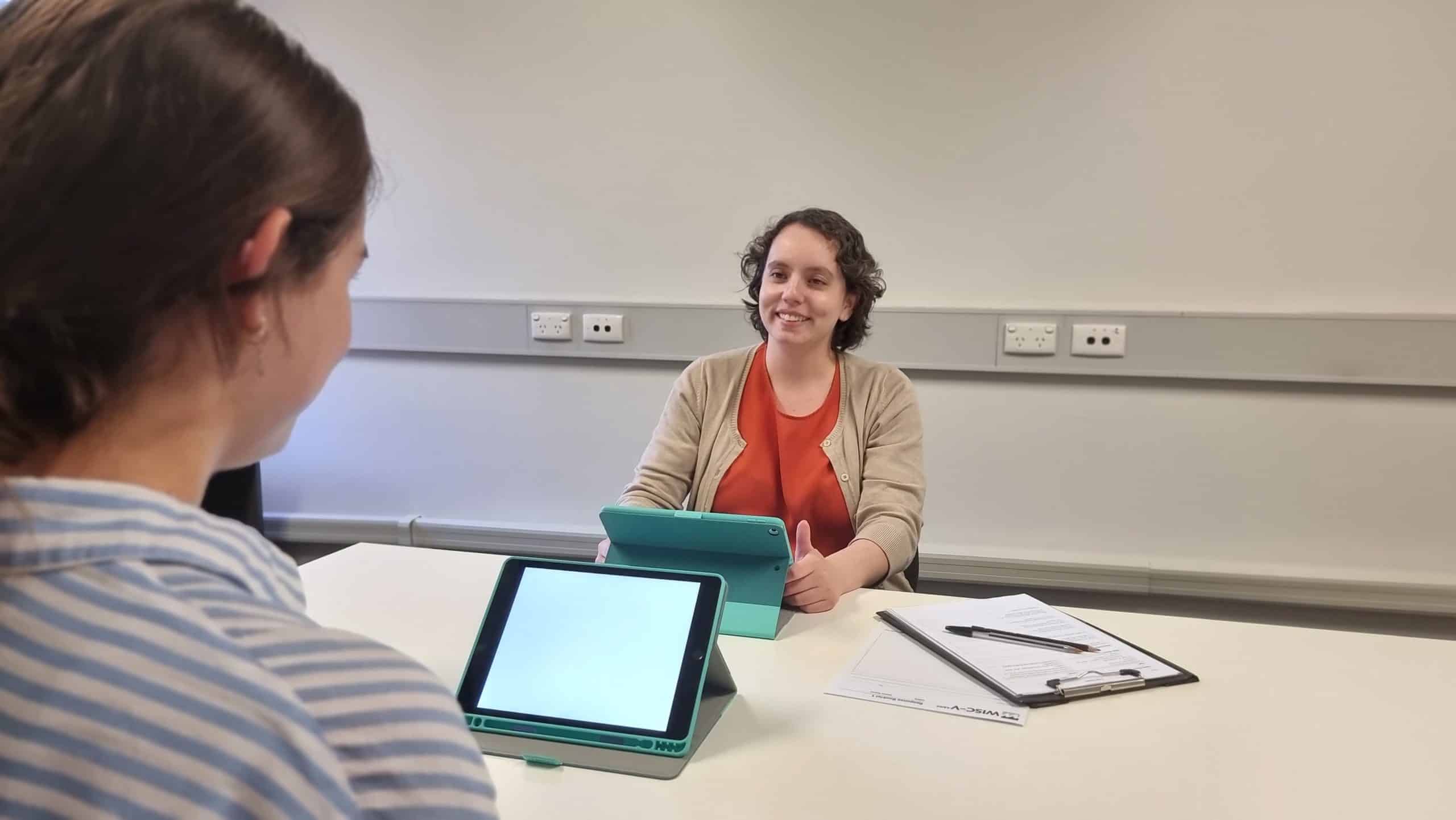
A psychoeducational assessment is used to identify strengths and weaknesses, diagnose Specific Learning Disorder (e.g., in reading, often called Dyslexia) (based on the DSM-5-TR criteria) if appropriate, and make evidence-based recommendations to improve learning outcomes.
A psychologist will conduct the assessment and write a detailed report with recommendations to support learning.
At Speld Qld we offer assessments to explore people’s learning and provide a report and recommendations on how to support their learning.
Our scope is focused on supporting people’s learning rather than applications for other services. However, you are able to provide our reports to any other services that you may be working with.
Background Questionaire
A background questionnaire will be sent to you prior to the assessment with a consent form and an optional questionnaire for you to pass onto a teacher and/or tutor to complete. Send through any other previous assessment reports (e.g., psychology, speech language, hearing tests), school reports, work samples, or other information you may have to speld@speld.org.au.
Interview
An initial interview will be completed on the day or prior to the assessment if needed to gather additional information.
IQ/Cognitive Assessment
An IQ/Cognitive assessment will be completed as part of the assessment to investigate cognitive strengths and weaknesses.
Academic Achievement Assessment
An academic achievement assessment will be completed to investigate literacy and numeracy skills.
Comprehensive Report
A report will be provided to you within 6 weeks of the assessment. If for any reason this is not possible, the psychologist will discuss this with you. Occasionally, complexities with a report or time waiting for additional information can cause delays outside this 6-week timeframe. The report will include the findings and recommendations, including relevant resources, strategies, and accommodations.
Feedback Session
You will be offered a 20-minute feedback session via a phone call or video conference to discuss the report. You can invite other people to join this feedback session (e.g., teacher). Any requests for extra feedback sessions for other stakeholders (e.g., school) can be discussed with the psychologist and may incur an extra fee.
Prior to your appointment
The psychologist will gather important background information through a background questionnaire and may also request school reports, work samples and teacher feedback. The week before the assessment Speld Qld or the psychologist will contact you by text, email, or phone to confirm your appointment and discuss any key questions they have prior to the assessment day.
Arrival
We recommend that you arrive 15 minutes prior to your appointment time at the Speld Qld office. The psychologist will meet you in the waiting room at the time of your appointment.
Initial Interview
The psychologist will have an initial interview with you to gather further information and explain what the assessment session will look like. This typically takes 5 – 15 minutes.
Assessment
The assessment session can often take 2-4 hours in total. The psychologist will talk to you about the assessment and offer breaks during the assessment as needed. You can bring water and snacks for the assessment and breaks.
After the assessment
The psychologist may wish to speak to you about the assessment session and gather additional information. They will also discuss when the assessment report will likely be completed.

Speld Qld psychologists will use a range of tools as part of the psychoeducational assessment including standardised assessments, direct observation, and history. Assessments and tools that may be used include:
IQ cognitive
Academic achievement
Questionaires
Other assessments
Observations
Background information and reports from parents, teachers and specialists
What does the assessment diagnose?
Psychoeducational assessments can be used to diagnose a Specific Learning Disorder. Speld Qld uses the DSM-5-TR diagnostic criteria (Diagnostic and Statistical Manual of Mental Disorders) when investigating Specific Learning Disorder. There are specific criteria that need to be met, which means not everyone that experiences difficulties with literacy or numeracy meets criteria for a Specific Learning Disorder. However, recommendations will always be provided to support areas of strength and areas of difficulty. Someone can have a Specific Learning Disorder with impairment in reading, written expression, or mathematics (or a combination of all three). There are also specific patterns of difficulties that are often referred to as Dyslexia or Dyscalculia.
The other disorder that may be diagnosed following an assessment is Intellectual Developmental Disorder (Intellectual Disability). The psychologist will discuss this with you and additional questionnaires may need to be completed if it is required.
At Speld Qld our psychoeducational assessments do not provide diagnoses of other mental or neurodevelopmental disorders (e.g., Generalised Anxiety Disorder, ADHD, Autism Spectrum Disorder, Developmental Coordination Disorder, etc.). If symptoms associated with other disorders are indicated, the psychologist will give recommendations to investigate it further with the relevant health professional.
If the psychologist suspects attention difficulties are impacting on learning they may suggest completing the Conners 4 Rating Scales. They may also recommend to see a paediatrician (or psychiatrist) to investigate ADHD and provide a diagnosis if appropriate.
What happens if we are sick on the day of the assessment?
Call Speld Qldas soon as possible so that we can reschedule your appointment.
What happens if the psychologist is sick on the day of the assessment?
Speld Qld will let you know as soon as possible and reschedule or reassign your appointment to a different psychologist.
What happens if the assessment is unable to be completed on the day?
There can be a range of reasons why an assessment may not be able to be completed, such as illness, engagement, behaviour, or social-emotional responses (e.g., high anxiety). If this happens, the psychologist will speak with you about what the most appropriate next steps will be. This could include taking a break, a trusted person (e.g., parent) sitting in, rescheduling to another day, or adjusting the appointment to a consultation with recommendations on how to access support until an assessment is able to be completed.

The Speld Qld Team of Education Advisors receive hundreds of calls each year where parents, carers and guardians report that their child is being supported well in their school setting. The classroom teachers are aware of the young person’s additional needs and are making suitable adjustments to ensure their access to the curriculum is on an equitable basis.
Unfortunately, we also speak to quite a number of frustrated parents who report little awareness of, or support for children with either a diagnosed, or yet to be diagnosed learning need, or a learning difference that impacts their progress. In this, and all cases to be honest, we recommend parents advocate for their children’s needs.
For parents in this context, advocacy means getting support from another person to help you express your views and wishes, and help you stand up for your child’s rights. What that means in the real world is that you might need to become a persistent, possibly slightly annoying parent which the school knows will follow up how and when adjustments are being accessed and will chase them up if they are not made available.
The reason to advocate for your child’s needs, apart from ensuring your child has equitable access to the curriculum, is that the school has an obligation to make relevant adjustments to support individuals. These are legislated in the Disability Standards for Education (2005) and the Disability Discrimination Act (1992). The Queensland Curriculum and Assessment Authority (QCAA) outlines their principles of Equity in education on their website.
The QCAA is committed to Queensland students accessing a fair and just, inclusive education which provides:
As our team often say to parents, a lot of the value in the psychoeducational assessments carried out by our psychologists is that the assessment reports have recommendations and strategies that schools should be able to take and implement in a straightforward manner. The assessment reports are valuable as the strategies line up with those reasonable adjustments in bold above, that can help pupils access their education on the same basis as their peers.
Improving your understanding of your child’s additional need and the ways a school can support them is always going to help. Please remember that understanding the causes and effects of, for example, dyslexia is very useful. However, there is no generic dyslexic pupil, so the support that is needed is going to be very individual to each individual.
The assessment report will provide a list of recommended and individualised supports which are based around the person’s individual profile. These supports are recommended to support the individual who was assessed. For example, having a reader and a scribe available may be useful for some, their use may not be appropriate for all.
Check the recommendations and strategies, ask the person being supported what works for them, then approach the school with a list of effective supports that can work for your child.
Schools have staff who may change roles, or are replaced. Pupils progress through each academic year and build relationships with a new team of teachers as they go. New faces mean that your child’s needs will need to be passed on to whoever is currently best placed to support them. Hopefully, your school’s learning support team will make new staff aware of any additional support needed, possibly through the use of a learner profile (the name of which will vary between school settings).
In case your child’s needs are not distributed, email staff at the beginning of each year, semester, or term, or in the run up to an exam block. Outline the supports that are currently working for your child, or update staff on how those needs have changed. As pupils develop, their support needs can change so please check in with your child to ensure the supports you are advocating for are still useful, and listed in the most current assessment report.
If you are heading into a meeting with your school, prepare a list of questions or points for discussion. Before you leave the meeting check that any items that need to be actioned have a follow up date, hopefully with a suitable person to provide feedback. Remember, you are part of a team working toward improving the adjustments provided to your child, but also the other pupils in their class who may also need support.
Self advocacy by pupils is a great thing to work toward. If your child is happy to let staff know the adjustments they need, it can build ownership, independence and confidence. However, classrooms are busy places, staff can be seen as scary and unapproachable and the desire to not stand out may be overwhelming. Encourage self-advocacy, but it may arrive in very small steps.
It is likely to be a long and stressful journey but any advocacy by you that can ensure relevant adjustments are consistently in place will take a big cognitive load off your child. Knowing they can go through their school day using strategies to reduce or work around their additional need removes a big stressor from pupils that may already be struggling to keep up.
Be that slightly annoying parent who will pop up in a teacher’s inbox, or in person to remind them that some of their pupil needs a bit more support. When they understand that the easiest way to not have to deal with you is to support the pupils in their class, hopefully adjustments will be consistently in place.
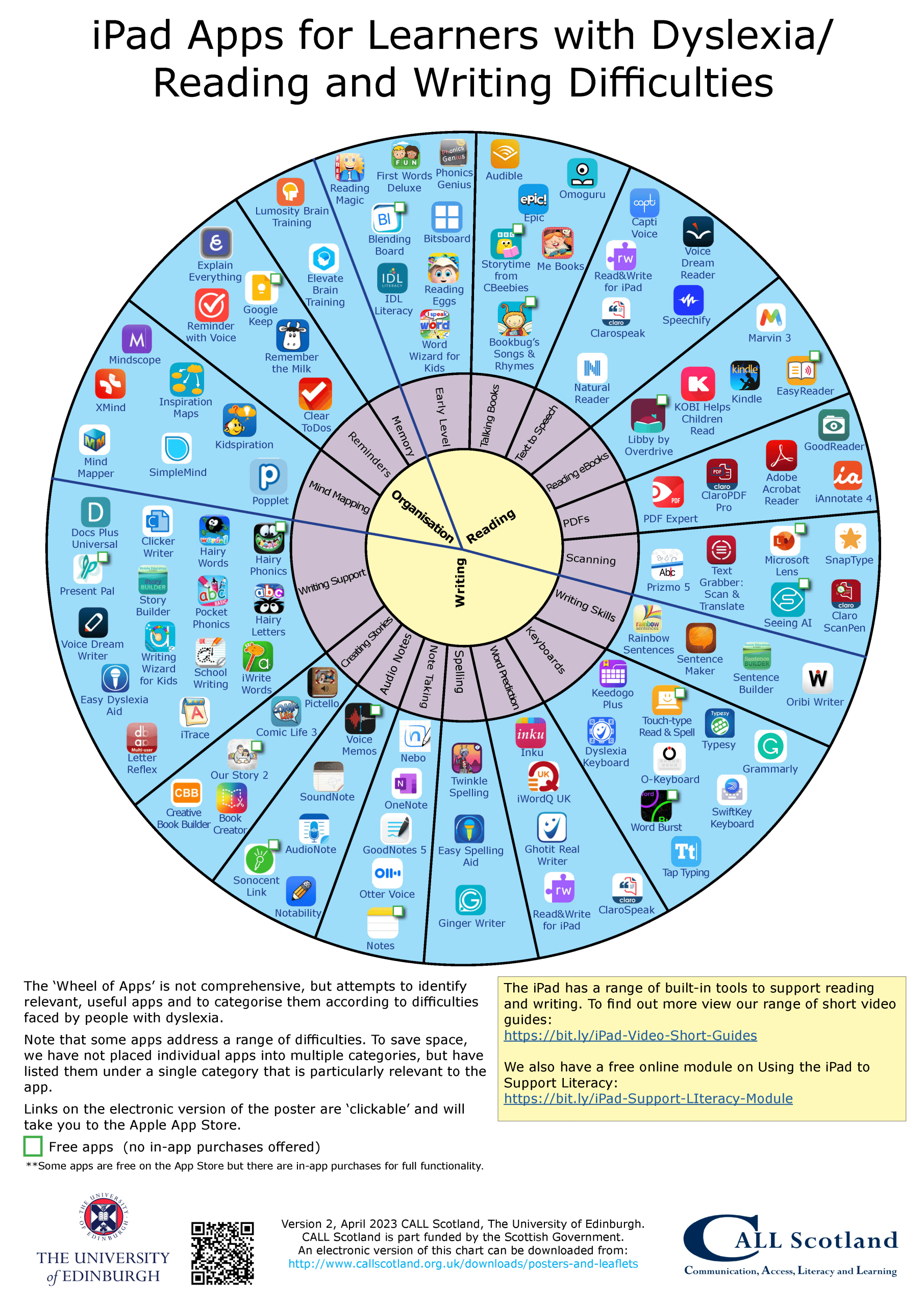
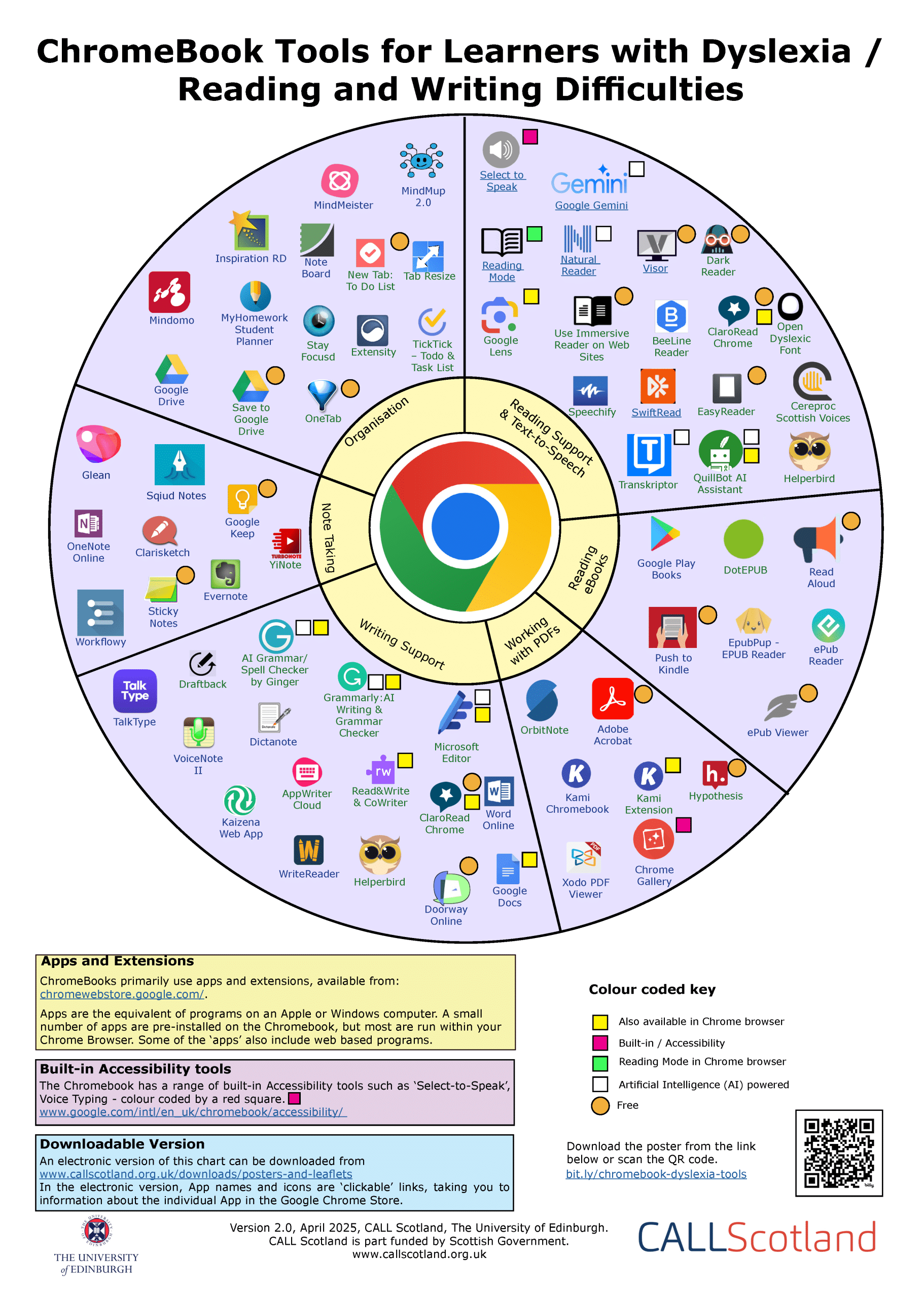
CALL Scotland (Communication, Access, Literacy and Learning) help children and young people to overcome disability and barriers to learning created by their environment, and to fulfil their potential. They offer free resources for all to download, including their popular 'Wheel of Apps' posters which provide useful apps across multiple devices for those who have a learning difficulty: https://www.callscotland.org.uk/downloads/posters-and-leaflets/
iPad Apps for Learners with Dyslexia: https://www.callscotland.org.uk/downloads/posters-and-leaflets/ipad-apps-for-learners-with-dyslexia/
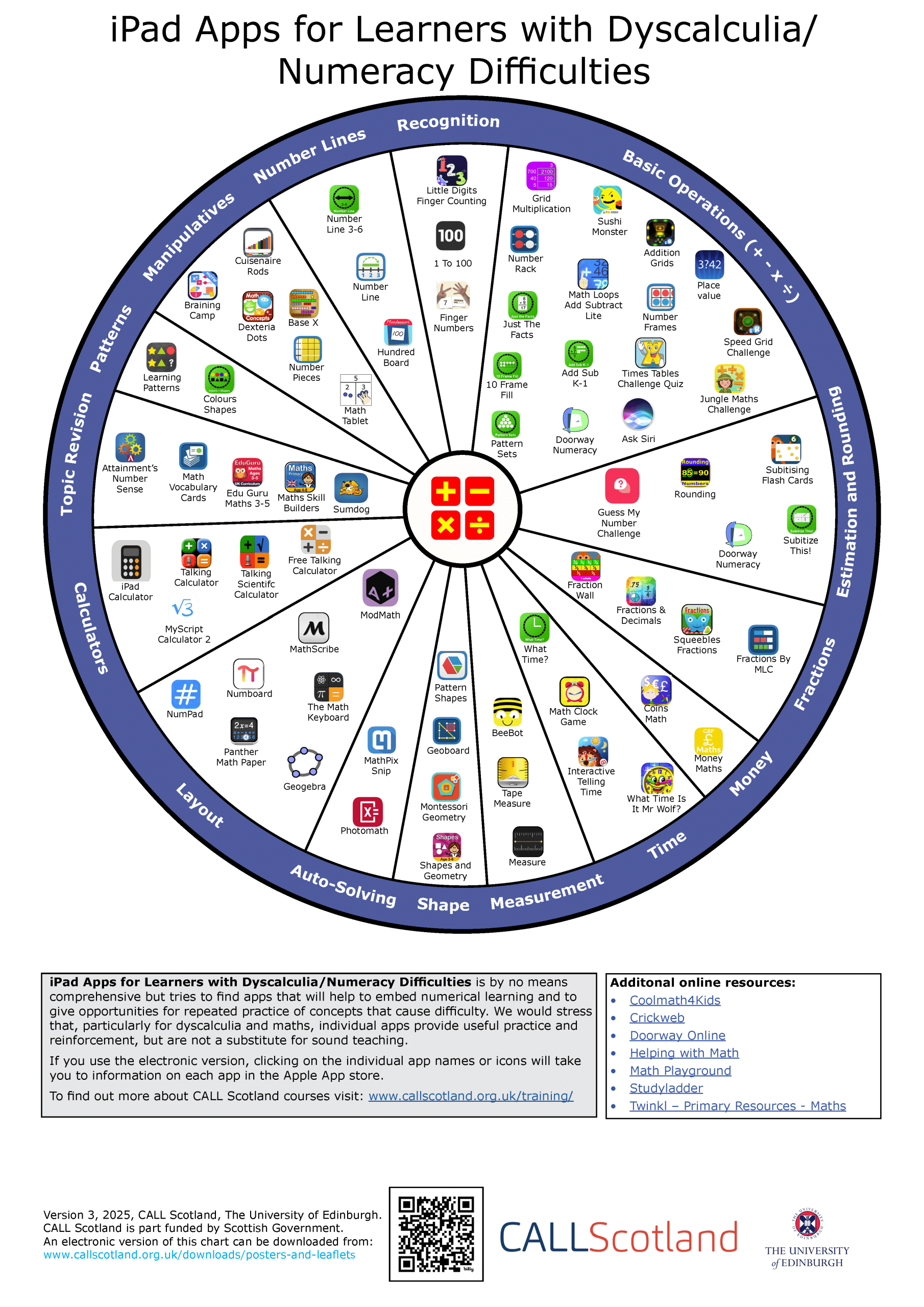
iPad Apps for Learners with Dyscalculia/Numeracy Difficulties: https://www.callscotland.org.uk/downloads/posters-and-leaflets/ipad-apps-for-learners-with-dyscalculianumeracy-difficulties/
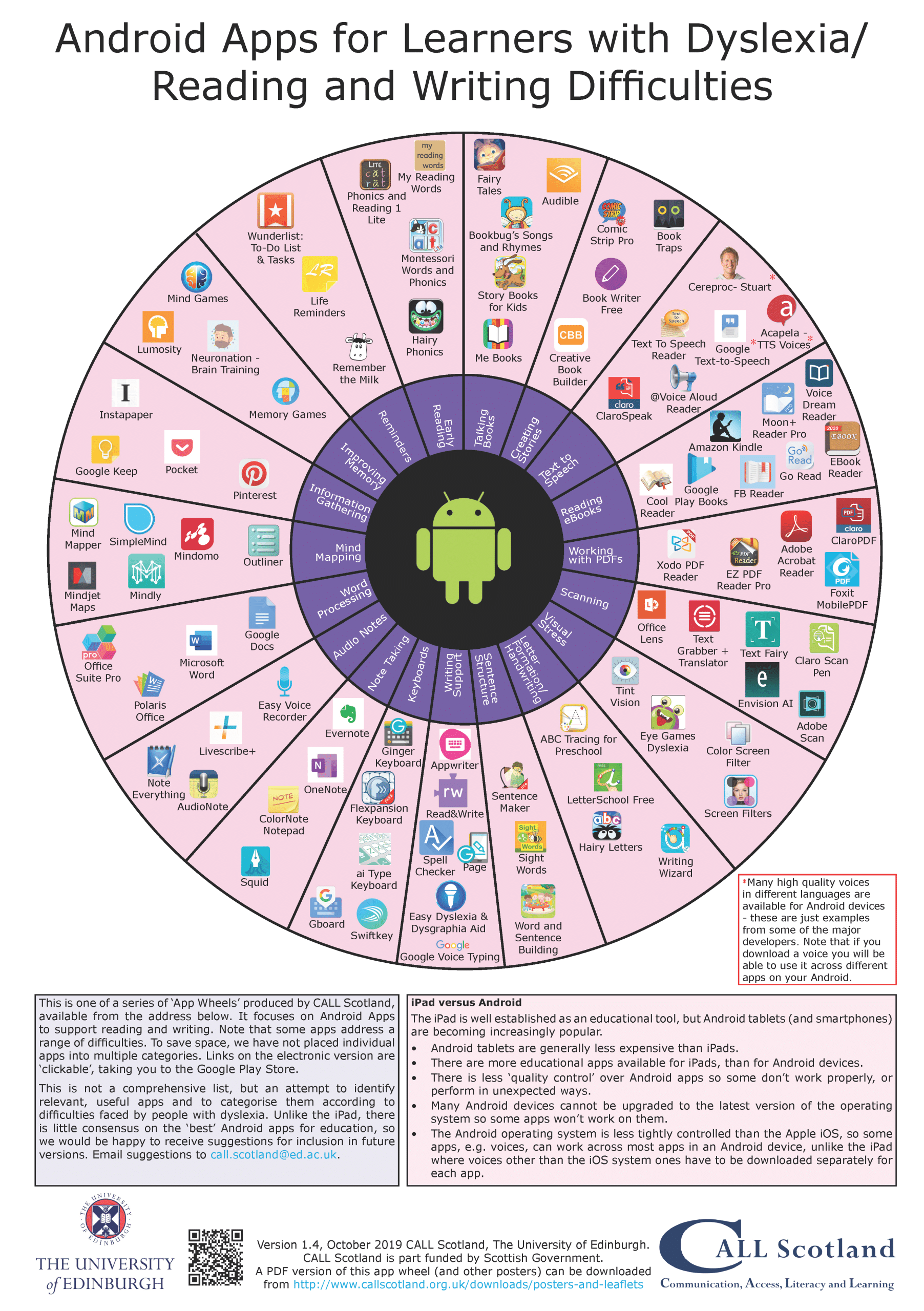
Android Apps for Learners with Dyslexia: https://www.callscotland.org.uk/downloads/posters-and-leaflets/android-apps-for-learners-with-dyslexia/
ChromeBook Tools for Learners with Dyslexia / Reading and Writing Difficulties: https://www.callscotland.org.uk/downloads/posters-and-leaflets/chromebook-apps-and-extensions-for-learners-with-dyslexia/
(adapted from Emma Derbyshire’s blog: https://www.bera.ac.uk/blog/dyslexia-and-artificial-intelligence)
Most readers are likely familiar with ChatGPT by now. For some, this term evokes hope and excitement, while others may feel apprehensive.
Before discussing ChatGPT's potential applications for dyslexia, let's first define and clarify what ‘artificial intelligence’ (AI) means. According to Britannica (2023), AI is defined as ‘the ability of a digital computer or computer-controlled robot to perform tasks typically associated with intelligent beings.’ However, individuals with dyslexia often find tasks like searching for and extracting information from texts more challenging than neurotypical individuals.
AI has now entered what is referred to as the ‘stage of intelligent cognition’ (Wang et al., 2023), meaning it has the ability to replicate human-like cognitive processes. While this may seem daunting, we can also view it from a different perspective. Consider a classroom of 30 students, each with multiple questions about a topic. Can that one teacher effectively address all those inquiries? This is where AI systems like ChatGPT could be beneficial, allowing students to ask questions and receive responses that deepen their comprehension.
AI could serve as a valuable assistive tool for individuals with dyslexia. Assistive technology, now including AI, can improve the learning experience and create a more supportive environment for those facing dyslexia (Pontikas et al., 2022). When applied correctly, such technology has the potential to offer an added layer of reinforcement, positively impacting learning outcomes (Barua et al., 2022).
Gavin Reid (2009) characterizes dyslexia as: ‘a processing difference, typically evident in challenges with literacy acquisition affecting reading, writing, and spelling. It can also influence cognitive functions such as memory, processing speed, time management, coordination, and automaticity. Individuals may experience visual and/or phonological difficulties, alongside variations in educational achievement. Recognizing these individual differences and learning styles is crucial when planning interventions and accommodations.’
Interestingly, this definition highlights the importance of learning styles, interventions, and accommodations. In our rapidly advancing technological era, AI could act as a vital tool for accommodation and intervention to bolster learning.
‘Providing access to AI for individuals with dyslexia could offer broader benefits, such as enhanced mental well-being, lower anxiety levels, and improved academic engagement.’ Studies from the University of California involving children and adolescents (ages 7–14) with dyslexia indicate that this condition is associated with heightened anxiety, which can negatively affect academic performance (Hossain et al., 2021). Therefore, offering AI tools to those with dyslexia could logically result in improved mental health, reduced anxiety, and greater engagement with education. Although further research is necessary to confirm these outcomes, their plausibility remains strong.
Here are additional considerations:
Viewpoint 1: The Promise of AI for Individuals with Dyslexia
• Serves as a foundational resource for cross-checking and expanding upon information.
• Acts as a basis for revision that fosters deeper understanding.
• Allows for personalized responses to specific inquiries.
• Offers an individualized learning approach, especially beneficial for those who struggle with reading information.
• Simplifies complex concepts, making explanations more accessible for areas where confusion exists, or information is not yet fully grasped.
Viewpoint 2: The Risks of AI for Individuals with Dyslexia
• Users should avoid directly copying AI-generated text and presenting it as their own work.
• AI should not be treated as the sole source for information.
• AI text generation cannot replace established educational strategies that underpin reading and writing.
Guidance is now needed on how to effectively integrate AI within educational environments. Recently, the Joint Council for Qualifications issued guidelines regarding AI use in assessments (JCQ, 2023). They emphasize that, similar to traditional literature, sources generated by AI must be appropriately cited to prevent plagiarism, using examples like: ChatGPT 3.5 (https://openai.com/blog/chatgpt/), date.
While there is currently a lack of comprehensive studies and publications on the intersection of AI and dyslexia, this area is expected to evolve. In the interim, AI may be regarded as another form of assistive technology, providing a supplementary foundation for learning and comprehension. When used and cited correctly, AI could greatly benefit individuals with dyslexia and be advantageous for other students as well.
References
Barua, P. D., Vicnesh, J., Gururajan, R., Oh, S. L., Palmer, E., Azizan, M. M., Kadri, N. A., & Acharya, U. R. (2022). Artificial intelligence enabled personalised assistive tools to enhance education of children with neurodevelopmental disorders: A review. International Journal of Environmental Research and Public Health, 19(3), 1192.
Britannica. (2023). Artificial intelligence. Retrieved June 6, 2023, from https://www.britannica.com/technology/artificial-intelligence
Hossain, B., Bent, S., & Hendren, R. (2021). The association between anxiety and academic performance in children with reading disorder: A longitudinal cohort study. Dyslexia, 27(3), 342–354.
Joint Council for Qualifications [JCQ]. (2023). AI use in assessments: Protecting the integrity of qualifications. Retrieved September 7, 2023, from https://www.jcq.org.uk/exams-office/malpractice/artificial-intelligence
Pontikas, C. M., Tsoukalas, E., & Serdari, A. (2022). A map of assistive technology educative instruments in neurodevelopmental disorders. Disability and Rehabilitation: Assistive Technology, 17(7), 738–746.
Reid, G. (2009). Dyslexia: A practitioner’s handbook (4th ed.). Wiley Blackwell.
Wang, X., He, X., Wei, J., Liu, J., Li, Y., & Liu, X. (2023). Application of artificial intelligence to the public health education. Frontiers in Public Health, 10, 1087174.

Consider a learning assessment to identify specific areas of strength and difficulty and the most appropriate interventions. The assessment report will also recommend other professionals who may be able to support your child (e.g., tutor, speech pathologist, occupational therapist, paediatrician).
If your child’s academic difficulties persist for at least six months despite targeted intervention (at school or with a tutor):
Remember - early intervention is key to addressing learning challenges, building confidence, and ensuring your child has all the tools and support needed to learn.
Speld Qld Advisory Line
https://speld.org.au/advisory-line/
Ph: (07) 3391 7900
7 Tips for Meeting with Your Child’s School
11 Questions for dyslexia friendly schools
NCCD
https://www.nccd.edu.au/for-parents-guardians-and-carers
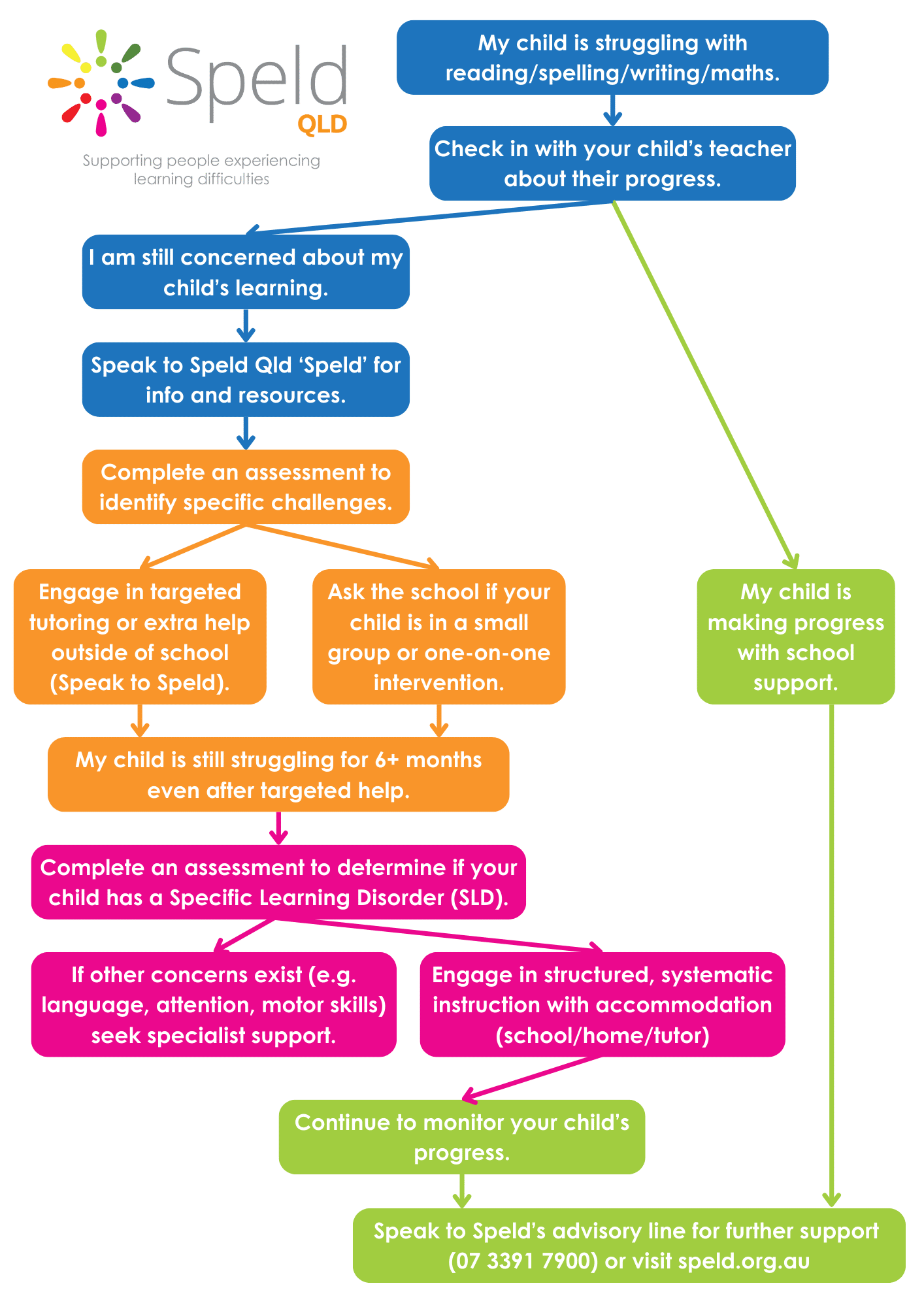
Decision-making Flowchart for Learning Assessments
Assistive Technology (AT) is the hardware and software used by a student with learning difficulties which enables them to achieve their potential and beyond. Assistive Technology (AT) benefits individuals with learning difficulties such as dyslexia, dysgraphia, dyspraxia, memory difficulties, language disorders and auditory processing disorder. AT lightens the load for students with learning difficulties and those who support them.
Assistive Technology (AT) in the classroom can be extremely helpful for students with specific learning disorders and enable equity of access to the curriculum for all students.

Here are some great resources for understanding how AT can be integrated into standard classroom practice and the benefits for all students, but particularly students with specific learning disorders.
https://www.understood.org/en/search-results?query=assistive%20technology
https://education.qld.gov.au/students/inclusive-education/assistive-technology
https://www.ldrfa.org/exploring-benefits-assistive-technology/
Speld Qld is committed to ensuring that Queenslanders who experience learning difficulties have access to information and training in relation to assistive technology. Knowing how to maximise assistive features of a device and how to utilise assistive tools often lightens the load and improves outcomes for those who experience learning difficulties. Speld Qld has offered iPad consultations for several years now and we are now pleased to announce that we are now able to offer similar consultation sessions for PCs and laptop users.
One hour face-to-face AT Consults are available for $160.00 (from the 1st of February). This service is available to Financial Speld Qld Members only.